
Mental Health First Aid: A New Standard for Workplace Safety
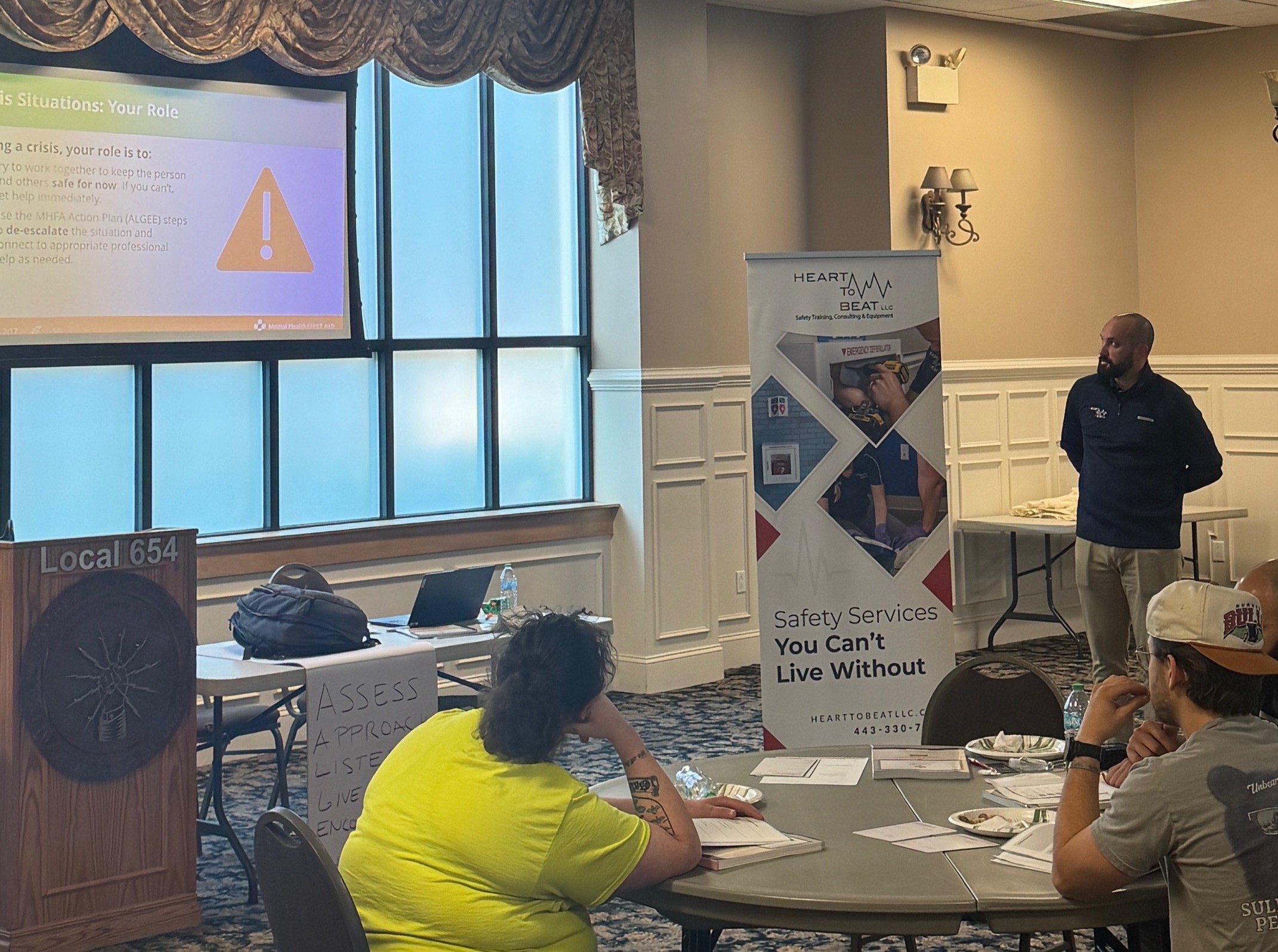
Last week, we had the opportunity to teach Mental Health First Aid (MHFA) to 5th year apprentices at the International Brotherhood of Electrical Workers (IBEW) Local 654.
It was one of the more meaningful trainings we have led.
These are individuals working in a demanding profession. Long hours, pressure to perform, and high expectations are part of the job. What stood out was not just their engagement—it was how relevant the content felt to their day-to-day reality.
After the training, Bill Adams, President of IBEW 654, shared something that stuck with me:
“Our sincere hope is that this new generation of workers will understand and embrace the value of MHFA the same as OSHA-30, Fall Protection, and CPR/First Aid.”
Why This Matters
Mental health challenges are present in every workplace—often in ways we do not immediately see.
While this training took place in the construction trades, the underlying reality is universal.
Across industries, we see the same themes:
-
- Corporate teams navigating burnout and stress
-
- Healthcare workers under constant emotional strain
-
- Employees balancing work, family, and personal challenges
-
- Professionals in high-performance environments facing pressure behind the scenes
Different environments. Same human reality.
By the Numbers
-
- 1 in 2 people will experience a mental health challenge in their lifetime
- The average delay between first symptoms and receiving professional help is 11 years
What MHFA Actually Does
Mental Health First Aid is not therapy.
It is practical, actionable training that teaches people how to:
-
- Recognize signs of someone who may be struggling
-
- Have a conversation with confidence and empathy
-
- Guide someone toward appropriate support
In the same way CPR prepares someone to respond to a physical emergency, MHFA prepares someone to respond to a mental health challenge.
A Shift We Are Seeing
Historically, workplace safety programs have focused on physical risk.
What we are seeing now—across industries—is a broader definition of safety:
-
- Physical safety
-
- Psychological safety
-
- Human well-being
Leaders like Bill Adams are helping drive this shift, recognizing that mental health training is not a “nice to have”—it is becoming foundational.
A Simple Question
If someone on your team was struggling, would your people know what to do?
If This Resonates
We are continuing to bring Mental Health First Aid to organizations across industries throughout the Mid-Atlantic and beyond.
If you are thinking about:
-
- Expanding your safety or wellness program
-
- Supporting your employees in a more meaningful way
-
- Creating a more aware and prepared workforce
Dave Stefanski
Partner, Heart To Beat LLC
215-301-8289
About The Author
Dave Stefanski is a Partner at Heart to Beat, focused on helping organizations create safer, more prepared workplaces. He is passionate about expanding how companies think about safety, ensuring teams are equipped to respond to both physical and mental health emergencies.